
❄️🔥 𝐵𝑒𝑐𝑜𝑚𝑒 𝑎𝑛 𝐻𝑉𝐴𝐶 𝑇𝑒𝑐ℎ𝑛𝑖𝑐𝑖𝑎𝑛 — 𝐺𝑒𝑡 𝑃𝑎𝑖𝑑 𝑇𝑟𝑎𝑖𝑛𝑖𝑛𝑔 & 𝐶𝑒𝑟𝑡𝑖𝑓𝑖𝑐𝑎𝑡𝑖𝑜𝑛 𝑂𝑝𝑝𝑜𝑟𝑡𝑢𝑛𝑖𝑡𝑖𝑒𝑠!
✨ No Need To Worry About Tuition Fees | Government-supported HVAC paid training application guide(Starting from $18-20 per hour) ✨
Breaking into the HVAC field in Canada can pose real obstacles: high training costs, confusing certification steps, unclear wage expectations, and uncertainty about government-backed support. For many, these hurdles make it difficult to confidently start a new career in this essential trade.
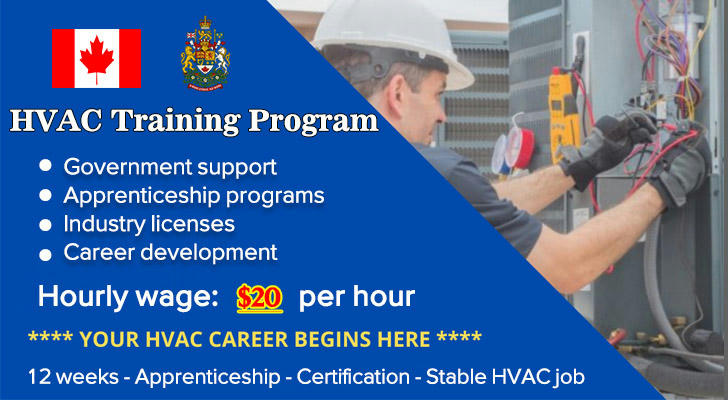
Drawing on the latest industry insights and government initiatives, this guide will help aspiring HVAC technicians chart a straightforward path by focusing on:
- Fast-track, paid HVAC training opportunities
- Paths to recognized certification (including the Red Seal designation)
- How government funding and support remove financial stress
- Career benefits and security with clear wage progression
📌 HVAC Technician: Career Outlook and Essential Skills
HVAC technicians are skilled professionals who install, maintain, and repair heating, ventilation, and air conditioning systems in residential, commercial, and industrial settings. Their work is critical to ensuring comfort, safe air quality, and energy efficiency indoors.
In-Demand Skills:
- Problem-Solving: Rapidly diagnosing and resolving issues with complex systems.
- Technical Knowledge: Understanding refrigeration cycles, thermodynamics, and electrical components.
- Safe Work Practices: Strictly following safety codes and using specialized tools.
- Communication: Explaining system issues and solutions to customers and collaborating on teams.
The Canadian HVAC sector is seeing robust demand, driven by the need to replace retiring technicians, a growing focus on energy-efficient technology, and ongoing construction across the country. Recent data suggests HVAC employment will remain strong for years, with varied opportunities in home service, commercial projects, and large-scale industry.
📚 Accelerated & Paid HVAC Training Programs
Getting started in HVAC doesn’t have to mean years in school or unmanageable tuition bills. Canada’s colleges and technical institutes offer condensed programs, some under one year, focusing on hands-on training and fast entry into the workforce.
Program Examples:
| Institution | Credential | Program Length | Estimated Tuition |
|---|---|---|---|
| BC Institute of Technology | Certificate, HVAC & Refrigeration Tech | 4~12 Month | ~$7,000 total |
| NAIT | Certificate, HVAC Refrigeration Technician | 1 year | ~$5,790 |
| Humber Polytechnic | Diploma, Heating & AC Technician | 2 years | ~$2,700/year |
| NSCC | Diploma, Building Systems Technician | 2 years | ~$3,620/year |
Many colleges blend classroom instruction with hands-on labs, preparing students for industry-required exams. Apprenticeship programs also allow even faster, paid entry, letting new technicians earn while gaining practical experience.
Typical Admission: High school diploma or equivalent, with English and basic math skills.
🔍 Mastering Certification and Apprenticeship Pathways
Step 1: Foundational Training
Most provinces require a high school diploma, but formal college education is not always necessary—apprenticeships and focused trade programs are a viable route.
Step 2: HVAC Apprenticeship
Registering as an apprentice, individuals combine 8,000–9,000 hours of on-the-job training over 4–5 years. Apprenticeships are paid, starting at $18–$20 per hour—about 50–60% of a certified technician’s wage—with progressive wage increases as skills grow.
Step 3: Certification and Red Seal Endorsement
Upon completing an apprenticeship, passing a provincial qualification exam is the next step. Technicians may then be eligible for Red Seal status, unlocking opportunities to work anywhere in Canada and signifying the highest recognition in the field.
Additional Licensing: Many HVAC roles require gas technician certifications or, in some regions, oil heating and sheet metal licensing.
Continuous Learning: The field evolves with technology and codes—ongoing training is a standard part of long-term career advancement.
📊 Earnings, Stability & Job Prospects
Canada’s HVAC market is booming, with projected equipment growth and strong job security across the country. Most HVAC equipment lasts 15–20 years, so the need for maintenance and replacement guarantees steady demand.
- Entry-level apprentices: $18–$20 per hour (while training)
- Certified technicians: Median wage around $36.28/hour; experienced professionals can earn up to $92,625 annually. Wages are highest for specialists and those who run their own contracting businesses.
Technicians also enjoy considerable job flexibility and the potential for career advancement into management, business ownership, or technical sales.
🎯 Government Support: Funding & Financial Relief
Training as an HVAC technician in Canada is more accessible thanks to robust government support, which significantly eases financial anxieties:
- Apprenticeship Grants: Up to $4,000 available to those pursuing Red Seal trades, awarded incrementally throughout training and on completion.
- Canada Apprentice Loan: Low-interest loans up to $4,000 per technical training period, with repayment delayed until training ends.
- Tuition Fee Subsidy: Most public universities offer partial tuition fee reductions for vocational training, and eligible applicants may receive scholarships.
For many, these supports mean the cost of education and required equipment is no longer a barrier to entry.
🧩 Who Can Apply? — Welcoming All Ages
- 18–25: Ideal for building skills from the ground up
- 26–35: Great option for career changers seeking faster stability
- 36–45: Skill enhancement or transition to higher earning roles
- 46+: Opportunities available for those in good physical condition; some roles offer lighter physical demands
📝 Application Process
Prepare Documents:
Valid identification and a recent resume outlining education and previous experience.Submit Application:
Directly to the college, technical school, or official apprenticeship board. Choose a nearby training provider if desired.(Quebec, Ontario, and British Columbia, etc.)Interview:
Expect questions about teamwork, communication, and technical readiness.Pre-employment Training:
Most programs offer a short onboarding period for safety orientation and job-specific workflow introduction.
✅ Summary
Combining practical training, supported apprenticeships, national certification, and strong government funding, becoming an HVAC technician in Canada is:
- Achievable, with less financial stress
- Structured to provide clear, progressive steps
- Flexible for all backgrounds and life stages
- Rewarding through stable employment and strong earning potential